
 EN
What Are Private Label Energy Pouches? Science, Definition, and Market Differentiation
Buccal delivery mechanics: Why absorption kinetics define efficacy and user experience
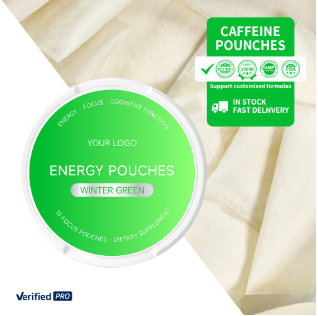
Private label energy pouches are nicotine-free oral pouches manufactured by a contract partner and sold under a retailer’s or brand owner’s name. The pouch sits between the upper lip and gum, releasing caffeine, B vitamins, amino acids, and flavor compounds into saliva. This format competes with energy drinks and shots—but its advantage lies in controlled dosing and a discreet, hands-free ritual.
The thin, highly vascularized oral mucosa enables direct transfer of small molecules into the bloodstream. Buccal absorption bypasses gastrointestinal breakdown and first-pass liver metabolism, so active compounds appear faster than when swallowed. A 50–100 mg caffeine pouch typically produces a noticeable lift in 10–20 minutes, compared to 30–45 minutes for an ingested energy drink. Absorption rate depends on pouch moisture, pH, particle size, and contact area. Faster onset supports perceived efficacy—but also heightens the importance of precise dosing. A release curve that is too rapid can cause jitters; one that is too slow feels weak. Formulation teams therefore design fill composition, moisture content, and fiber structure to smooth release and enhance user experience.
Private label vs. white-label vs. co-manufacturing: Clarifying ownership, control, and IP rights
Private label means the brand owner specifies the formula, flavor, pouch size, and packaging—and the manufacturing partner produces to that specification. The brand typically owns the formulation files, trademark, and commercial rights, supporting long-term differentiation and IP control.
White label is distinct: the manufacturer supplies a ready-made formula that the buyer rebrands. It offers speed and lower upfront cost, but the buyer holds no ownership of the formula or exclusive rights.
Co-manufacturing refers to the production relationship itself. A brand may engage a co-manufacturer for private label work under a defined supply agreement that clarifies equipment use, quality control protocols, minimum order volumes, and intellectual property terms.
Choosing among these models directly shapes speed to market, gross margin potential, and whether the pouch functions as a defensible, scalable brand asset.
Formulating Effective Private Label Energy Pouches: Ingredients, Dosing, and Safety
Evidence-based energy stacks: Caffeine, L-theanine, B-vitamins, and botanicals — optimal ratios and thresholds
Successful private label energy pouches rely on evidence-based ingredient combinations—not stimulant overload. Caffeine remains the primary active, with a typical single-pouch dose of 50–100 mg. The European Food Safety Authority (EFSA) considers up to 200 mg per single dose and 400 mg per day safe for most healthy adults.
L-theanine is frequently paired at a 2:1 ratio to caffeine—e.g., 100–200 mg with 50–100 mg—to smooth jitteriness and sustain calm focus. Clinical evidence shows L-theanine promotes alpha brain wave activity without sedation, counterbalancing caffeine’s peripheral stimulation.
B-vitamins—especially B6 and B12—support energy-yielding metabolism but function best as adjuncts, not replacements, for caffeine. Botanicals such as guarana and green tea extract contribute naturally occurring caffeine; formulators must account for this to avoid unintentional overstacking beyond labeled thresholds. Taurine (500–1,000 mg) may support neurological and cardiovascular function during mental exertion, though clinical consensus remains limited.
A balanced stack using moderate caffeine, L-theanine, and B-vitamins improves perceived energy and reduces post-use crash—a key driver of repeat purchase. Combining multiple caffeine-containing botanicals without calculating total caffeine risks overstimulation and label inaccuracies.
Nootropic dosing compliance: Aligning potency with FDA supplement labeling and GRAS safety standards
Every active ingredient in a private label energy pouch must comply with FDA dietary supplement labeling rules. The Supplement Facts panel must list each ingredient, its amount per pouch, and percent Daily Value for vitamins and minerals. Ingredients like caffeine and L-theanine must be Generally Recognized as Safe (GRAS) or otherwise meet federal safety standards at the labeled dose.
Because buccal pouches deliver concentrated, non-titratable doses, label accuracy is especially critical. While third-party testing is not legally mandated, it provides essential documentation of product integrity and label accuracy—particularly for athletes or groups subject to drug testing.
Formulators should align nootropic potency with peer-reviewed safety data: chronic L-theanine intake up to 400 mg/day has been well tolerated in clinical studies. Disease-treatment claims are prohibited and may trigger FDA enforcement. Consistent batch testing and Certificates of Analysis help ensure private label energy pouches meet both label claims and regulatory expectations.
Flavor Innovation and Consumer Appeal in Private Label Energy Pouches
Flavor is often the strongest driver of trial and repeat purchase—because buccal delivery keeps taste compounds in prolonged contact with oral receptors. Leading manufacturers treat flavor as a sensory system: combining pH buffers, sweeteners, and cooling agents to mask bitterness from caffeine or botanicals.
Mint, citrus, berry, and coffee profiles remain mainstream, while tropical and sour candy notes are gaining traction with younger adult consumers. Encapsulated flavor systems—microbeads that release a second burst of flavor or cooling when pressed—are emerging as a key differentiator, adding interactivity and extending sensory engagement.
Slim pouch geometry and controlled moisture improve mouthfeel, reduce drip, and support discreet use in social or professional settings. Custom flavor development allows brands to align with regional taste preferences, prevent sensory fatigue, and reinforce brand identity. Rather than relying on generic profiles, successful private label programs combine consumer testing, stability trials, and iterative flavor matching to ensure the pouch experience reflects the product’s energy positioning—transforming a functional format into a repeat-purchase lifestyle product.
Global Regulatory Readiness for Private Label Energy Pouches
Regulatory readiness is not a post-formulation afterthought—it determines market access, label claims, and ingredient viability for private label energy pouches.
FDA, EU Novel Food, and APAC compliance: Label accuracy, claim substantiation, and ingredient eligibility
In the United States, the U.S. Food and Drug Administration (FDA) requires supplement labels to accurately reflect ingredient identity, net quantity, and nutrition information. Structure/function claims require substantiation and a mandatory disclaimer, and manufacturing must follow current Good Manufacturing Practice (cGMP). Ingredients such as caffeine and botanicals must meet Generally Recognized as Safe (GRAS) standards or have approved food additive status.
In the European Union, many caffeine delivery formats and botanical blends fall under the Novel Food Regulation, requiring pre-market authorization if they were not consumed significantly before May 1997.
Across Asia-Pacific (APAC) markets, ingredient eligibility, maximum caffeine limits, and label language vary widely—some countries restrict synthetic caffeine in pouch form or mandate local-language warnings.
Brands must therefore validate formula, claims, and artwork against market-specific rules before commercial production. A single label rarely works across all regions.
FAQ Section
What are private label energy pouches?
Private label energy pouches are nicotine-free oral products that deliver caffeine, B vitamins, amino acids, and flavors through the buccal mucosa. They are manufactured by a contract partner for a brand or retailer.
How do energy pouches work?
Energy pouches are placed between the upper lip and gum, allowing active ingredients to absorb directly into the bloodstream via the oral mucosa, bypassing gastrointestinal breakdown.
What are the main advantages of private label energy pouches?
Advantages include faster absorption compared to drinks, controlled dosing, discreet use, and customizable formulas for market differentiation.
What distinguishes private label from white-label products?
Private label products are customized based on a brand owner's specifications, with full ownership of the formula and IP. White-label products are pre-made and rebranded, offering lower upfront costs but less control.
What ingredients are commonly used in energy pouches?
Typical ingredients include caffeine, L-theanine, B-vitamins, guarana, green tea extract, and optional flavor-enhancing botanicals.
Are private label energy pouches safe?
Safety depends on adherence to regulations like FDA safety standards and proper dosing. Third-party testing ensures label accuracy and product integrity.
What role does flavor play in energy pouch design?
Flavor significantly impacts consumer appeal, driving trial and repeat purchases. Manufacturers use precise combinations of pH buffers, sweeteners, and compounds to enhance taste.
Table of Contents
- What Are Private Label Energy Pouches? Science, Definition, and Market Differentiation
- Formulating Effective Private Label Energy Pouches: Ingredients, Dosing, and Safety
- Flavor Innovation and Consumer Appeal in Private Label Energy Pouches
- Global Regulatory Readiness for Private Label Energy Pouches
-
FAQ Section
- What are private label energy pouches?
- How do energy pouches work?
- What are the main advantages of private label energy pouches?
- What distinguishes private label from white-label products?
- What ingredients are commonly used in energy pouches?
- Are private label energy pouches safe?
- What role does flavor play in energy pouch design?